




Ever watched a toddler push a toy truck down a ramp, then chase it with wide-eyed wonder? That’s physics in action! With just a few simple materials, you can turn everyday play into hands-on science discoveries. Let’s explore fun ways to introduce the concepts of force and motion to curious little minds.
This post contains Amazon affiliate links, which means I earn a small commission from qualifying purchases at no extra cost to you by linking to Amazon.com. See the full disclosure here.
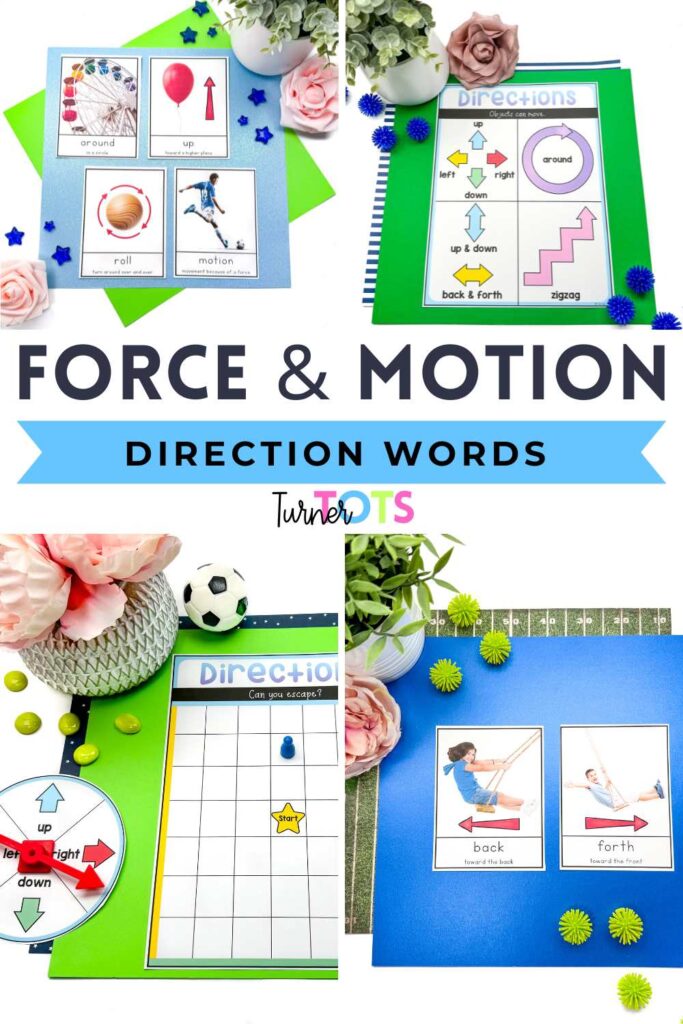
If you don’t know your left from right, you’re not alone — my sister tattooed an L and R on her wrists so that she could find her way around this world.
For preschoolers, learning direction is just as tricky, but way more fun!
With vibrant posters, real-world photographs to build vocabulary, playful directional cards paired with feathers or scarves, and an exciting ‘Escape the Box’ game, kids get to move, explore, and learn how to tell left from right without the permanent tattoos.
Give a preschooler a toy car, and all of a sudden, they’re a scientist conducting experiments – no instructions needed. What happens if I launch it off the couch? Will it crash into Mom’s toe? Can I make it go super-duper fast all the way to the sleeping dog?
That natural curiosity makes ramps the perfect tool for exploring force and motion.
Set up short, medium, and tall ramps to see which sends objects flying the fastest. Tip: Tape a brace on the back of the box to hold it together.
Then switch it up with different surfaces—cardboard, bubble wrap, or felt—and watch as little learners discover how texture changes the ride!
Hand a preschooler a magnet wand and suddenly they’re on a top-secret mission to attract literally everything in the room—including their shoes, the stapler, and someone’s shiny snack. The actual goal? Find out what’s magnetic and what’s, you know… just a chewed-up eraser.
After dragging their wands over every surface like tiny metal detectors, they sort magnetic vs. non-magnetic items with the seriousness of a science fair judge. (Yes, Timmy, the rubber duck is still not magnetic. Shocking.)
Then it’s time for the magnet maze—basically preschool-level navigation meets magnetic wizardry.
Is it educational? Definitely. Is it also just a great excuse to let them pretend they have superpowers? Absolutely.
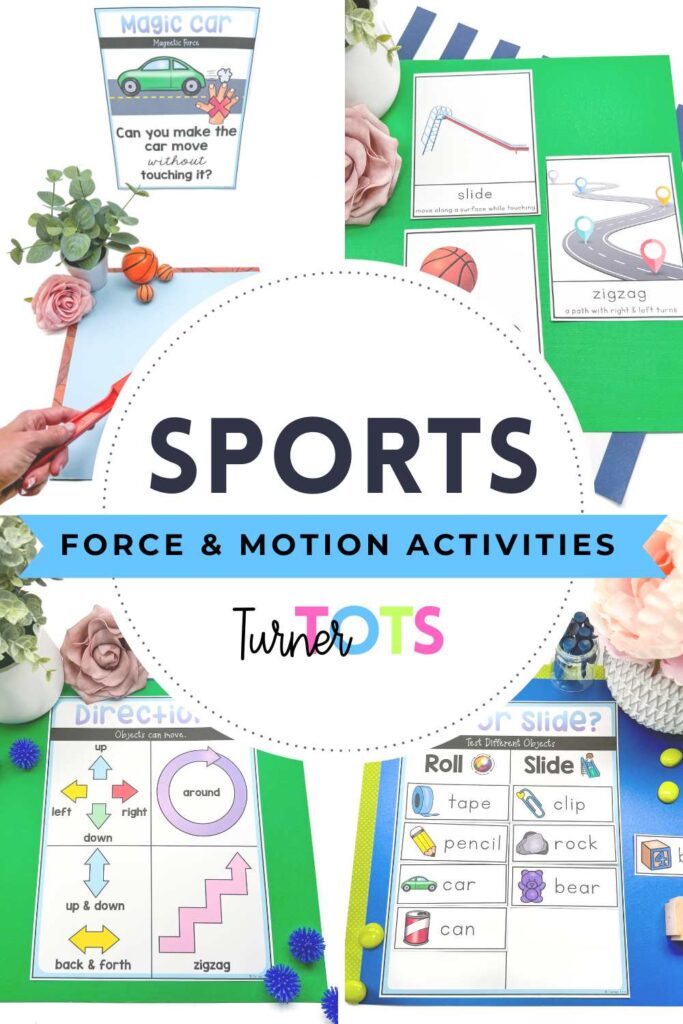
Turns out, a sorting chart and a pile of random classroom objects are all it takes to transform kids into miniature Isaac Newtons-sort of. Give them random objects and suddenly they’re shouting, “It rolls!” like they just discovered gravity.
Bonus points if they try to slide a glue stick or launch a block across the room “for science.”
Push or pull? That depends. Are we talking about a wagon, a chair, or a toddler dragging a backpack twice their size?
In this force and motion activity, preschoolers put their brains (and sometimes muscles) to work sorting action cards into “push” or “pull.” It sounds simple—until someone insists that pushing a shopping cart is definitely both. Science is tricky like that.
Force and motion might sound like big science words, but for preschoolers, it’s all just part of the fun. Whether they’re sorting push and pull cards, testing what rolls or slides, or navigating magnet mazes like pint-sized physicists, these hands-on force and motion activities turn curiosity into discovery. Sure, things occasionally go flying—but that’s just part of the learning process. Who knew physics could look so much like playtime?
| Cookie | Duration | Description |
|---|---|---|
| cookielawinfo-checkbox-analytics | 11 months | This cookie is set by GDPR Cookie Consent plugin. The cookie is used to store the user consent for the cookies in the category "Analytics". |
| cookielawinfo-checkbox-functional | 11 months | The cookie is set by GDPR cookie consent to record the user consent for the cookies in the category "Functional". |
| cookielawinfo-checkbox-necessary | 11 months | This cookie is set by GDPR Cookie Consent plugin. The cookies is used to store the user consent for the cookies in the category "Necessary". |
| cookielawinfo-checkbox-others | 11 months | This cookie is set by GDPR Cookie Consent plugin. The cookie is used to store the user consent for the cookies in the category "Other. |
| cookielawinfo-checkbox-performance | 11 months | This cookie is set by GDPR Cookie Consent plugin. The cookie is used to store the user consent for the cookies in the category "Performance". |
| viewed_cookie_policy | 11 months | The cookie is set by the GDPR Cookie Consent plugin and is used to store whether or not user has consented to the use of cookies. It does not store any personal data. |